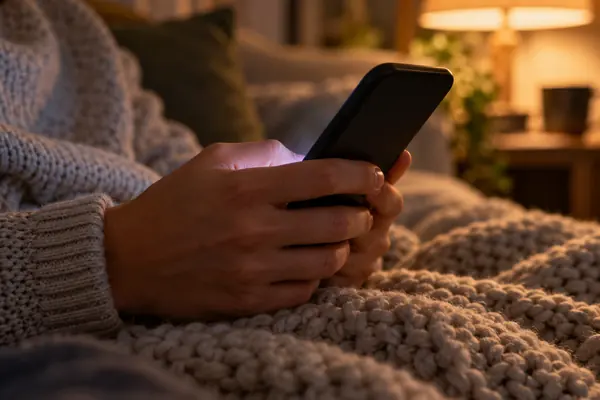
SILENT MODE
It can still sound
GOV.UK says an alert may make a loud siren-like sound, even if your phone is set on silent, vibrate, or read the alert out. It lasts about 10 seconds.
Check your settings phonedontwakeme

WHAT GOV.UK SAYS
Most nights, a silent phone stays silent.
The UK's Emergency Alerts system is built to break through: a loud, siren-like sound for about 10 seconds, even when the phone is set to silent. It is used rarely, and only when lives are at risk.
10 SECONDS of siren, even on silent
Check your phoneTHE SHORT ANSWER
Emergency Alerts are not ordinary notifications.
Here is what makes them different.
SILENT MODE
GOV.UK says an alert may make a loud siren-like sound, even if your phone is set on silent, vibrate, or read the alert out. It lasts about 10 seconds.
Check your settingsWHEN
Alerts are for life-threatening emergencies such as severe flooding, wildfires and extreme storms, and are sent only by the emergency services and government bodies.
See the numbersSETTINGS
Turning off 'severe alerts' and 'extreme alerts' stops them, but GOV.UK says alerts should be kept switched on for your own safety.
Before you switch offGeneral information only, not legal advice. For advice on your own situation, speak to a qualified lawyer or a free advice service.

FOUR THINGS TO KNOW
None of these needs an app or a sign-up. Emergency Alerts are free and come through the mobile network.
GOV.UK says alerts work on iPhones running iOS 14.5 or later and Android 11 or later. Install the latest updates.
It includes a phone number or a GOV.UK link. You can check whether an alert is genuine on gov.uk/alerts, and the service never emails you.
Some Android phones repeat reminders about the same alert. GOV.UK says these reminders can be turned off in the 'emergency alerts' settings.
Operator tests can be turned off separately: look for 'test alerts', 'exercise alerts' or 'operator alerts' in your settings.
TWO NUMBERS WORTH KNOWING
One figure on how far an alert can reach,
one on how rarely we switch our phones off.
≈ 4.5 million
Phones that received one alert
About 4.5 million mobile phones received the alert sent at around 6pm on 23 January 2025, ahead of Storm Éowyn. The government called it the largest live use of the system.
STORM ÉOWYN · GOV.UK
71%
Adults who never turn their phone off
Ofcom's 2018 Communications Market Report found 71% of adults say they never turn off their phone, and 37% check it five minutes before lights out.
ALWAYS ON · OFCOM 2018
GOV.UK's past alerts list shows live alerts on seven days between February 2024 and August 2026, plus national tests on 23 April 2023 and 7 September 2025.
A QUICK PHONE CHECK
Pick how your phone is set up overnight. The bar shows how likely it is that a live Emergency Alert, or an operator test, would sound.
Based on GOV.UK Emergency Alerts guidance. Settings names vary by phone; search your settings for 'emergency alerts'.
WHEN OPTING OUT MAKES SENSE
GOV.UK recognises that a sudden siren can put some people at risk. It gives the example of victims of domestic abuse with a concealed phone, who may find it appropriate to turn alerts off.
Ahead of the September 2025 national test, the government ran a public information campaign that included communications aimed at vulnerable groups such as victims of domestic abuse. If you cannot receive alerts, the emergency services have other ways to warn you.
Questions
It can. GOV.UK says your phone may make a loud siren-like sound even if it is set on silent, vibrate or read the alert out, for about 10 seconds.
No. Alerts are broadcast by phone masts to every compatible phone in range. GOV.UK says it does not need your phone number or location, and you do not need location services on.
Phones that are turned off, on 2G or 3G, wifi only or not compatible will not get alerts, and phones in airplane mode may not. Updating your software helps.
A test run by the government and mobile networks to check improvements. Most phones will not get one. It always has 'operator' in the title and says no action is needed.
Yes, by turning off 'severe alerts' and 'extreme alerts' in your settings. GOV.UK says alerts contain life-saving information and should be kept on for your own safety.
Updated
ABOUT THIS NAME
phonedontwakeme.com is part of the DoodleSale portfolio. It isn't in an auction right now, but you can ask about leasing it.